The Silence of the Mole
61st Venice Biennale Czech and Slovak Pavilion: Silence of the Mole duo show with Selmeci Kocka Jusko curator: Peter Sit 9 May – 22 November 2026
- Mar 2026
61st Venice Biennale Czech and Slovak Pavilion: Silence of the Mole duo show with Selmeci Kocka Jusko curator: Peter Sit 9 May – 22 November 2026
Curator text By Peter Sit
In 2026, the Czechoslovak pavilion in the Venetian Giardini celebrates its hundredth anniversary. It is a somewhat peculiar jubilee, since the country whose name is displayed on the pavilion no longer exists. In 1993, Czechoslovakia was dissolved into two states, the Czech and the Slovak Republics. Since then the pavilion, in its unassuming yet dignified architectural presence—it consists of a single rectangular exhibition hall under a skylight—has endured questions over how it should be split or expanded, to adjust it to the logic of fragmentation, separation, and competition so characteristic of the world today. And so, as if stoically countering the sharp edges of a divisive contemporaneity, the respective national representations alternate in its humble interior—a rhythm interrupted now and then, however, like in the last few years, as the pavilion has undergone a much-needed renovation (which is still ongoing). Yet what better way to honor a centenarian on its birthday than to bring back to life, even if temporarily, the pavilion’s original spirit of geopolitical collaboration, which was once rooted in an anticipation of a shared future? Hence, this Czecho-Slovak collaborative project, which I am honored to present—as a Slovak curator working with Czech artist Jakub Jansa and the Slovak artistic duo Selmeci Kocka Jusko (Alex Selmeci & Tomáš Kocka Jusko)—is a humble attempt to do precisely that. As we celebrate this opportunity, we are also aware that in a world of complex crises, as democratic frameworks worldwide reveal their limits with ever more clarity, cultural representation is neither innocent nor straightforward. Shaped by expectations of legibility and political neutrality on the one hand, and by a yearning for a culture that advocates for a just society on the other, a central figure of the project enters the scene: the mole.
Being of a generation that hardly experienced life in Czechoslovakia, we began by asking ourselves: Just what does this common country mean to us? We of course took it for granted as very small children; our lived experience of the federation was very brief, before we began learning about it in history lessons in primary school. In seeking a common ground, we found ourselves persistently floating away from the pages of textbooks and into passionate recollections of the Czechoslovak animated children’s films—plentiful, unique, world famous—that filled our lives, and the lives of many generations before and after us, with joy and an image of a world that aspired to be a just place for all. One animated character we recalled with particular nostalgia was the widely beloved Krtek (“The Little Mole” in English) from the eponymous series,¹ whose charming adventures we ended up discussing with an excitement and passion more intense than we’d experienced in a long time. We remembered the minutest details of the little mole’s escapades. We acted out the character’s stories, imitating Krtek’s giggles and odd non-verbal way of communicating. We recollected warm emotions transmitted from the television screen directly onto our lives. Living underground yet surfacing into the light of the day to charmingly explore friendship and cooperation, nature and interspecies sensitivity, empathy and kindness and care toward all and everyone whom the little mole happened upon, Krtek marked for us the coordinates of what we projected society to be, as children often do.
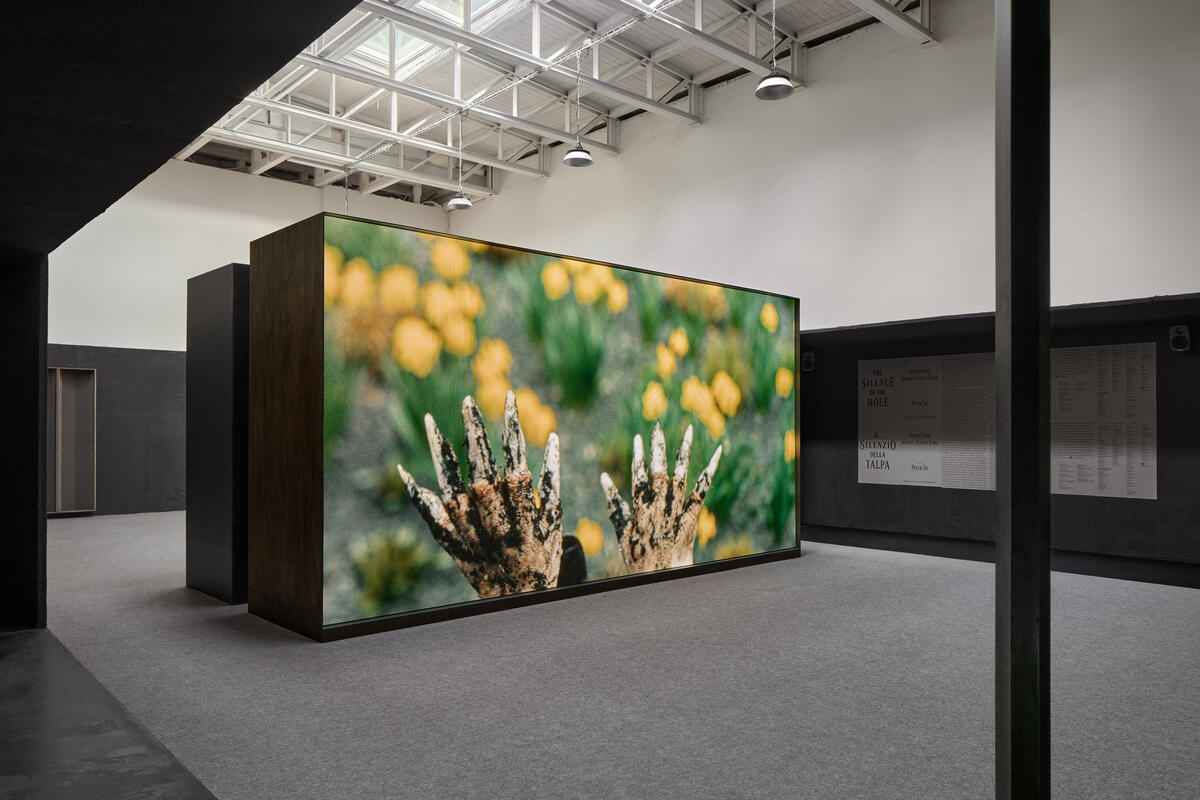
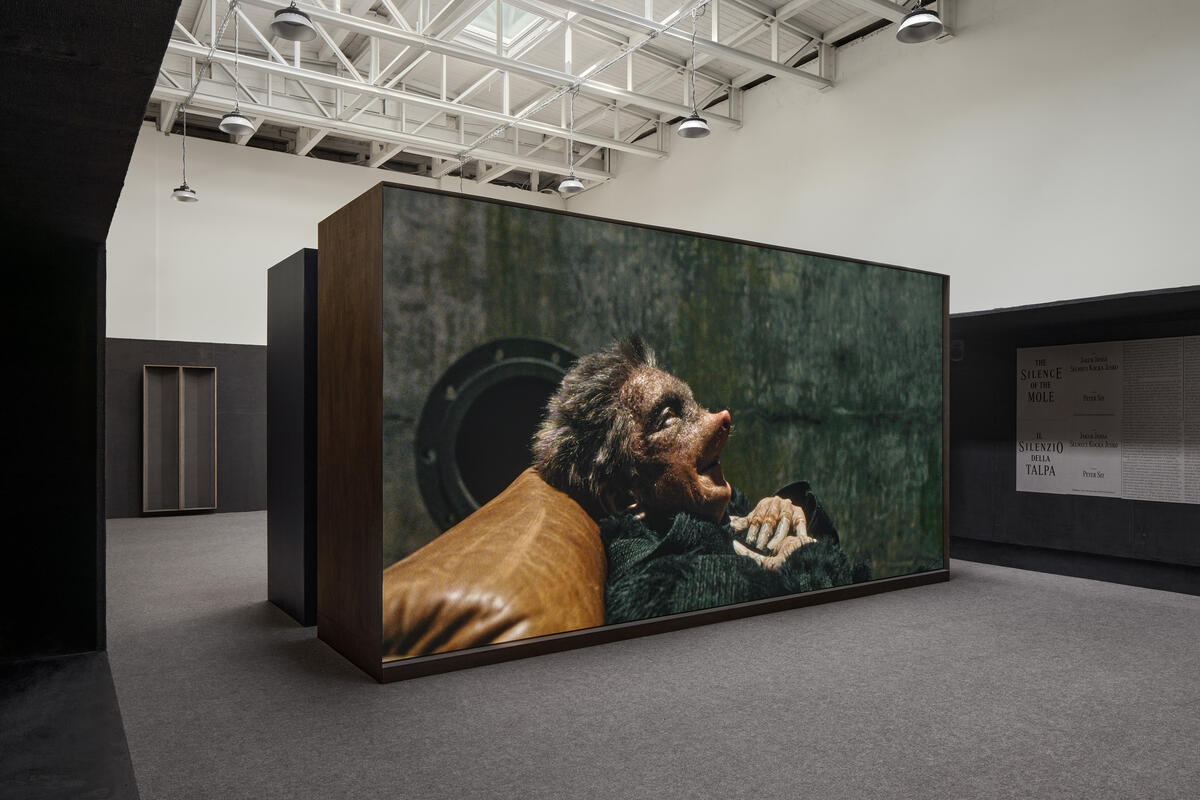
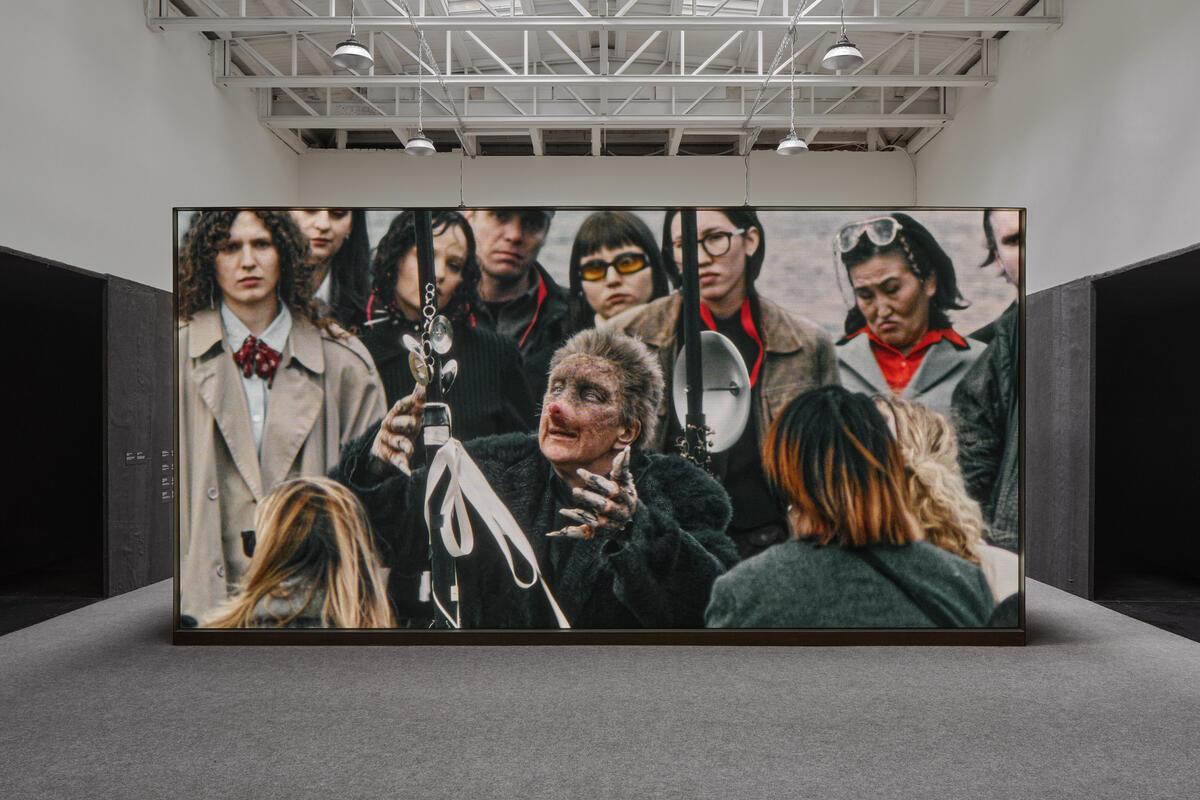
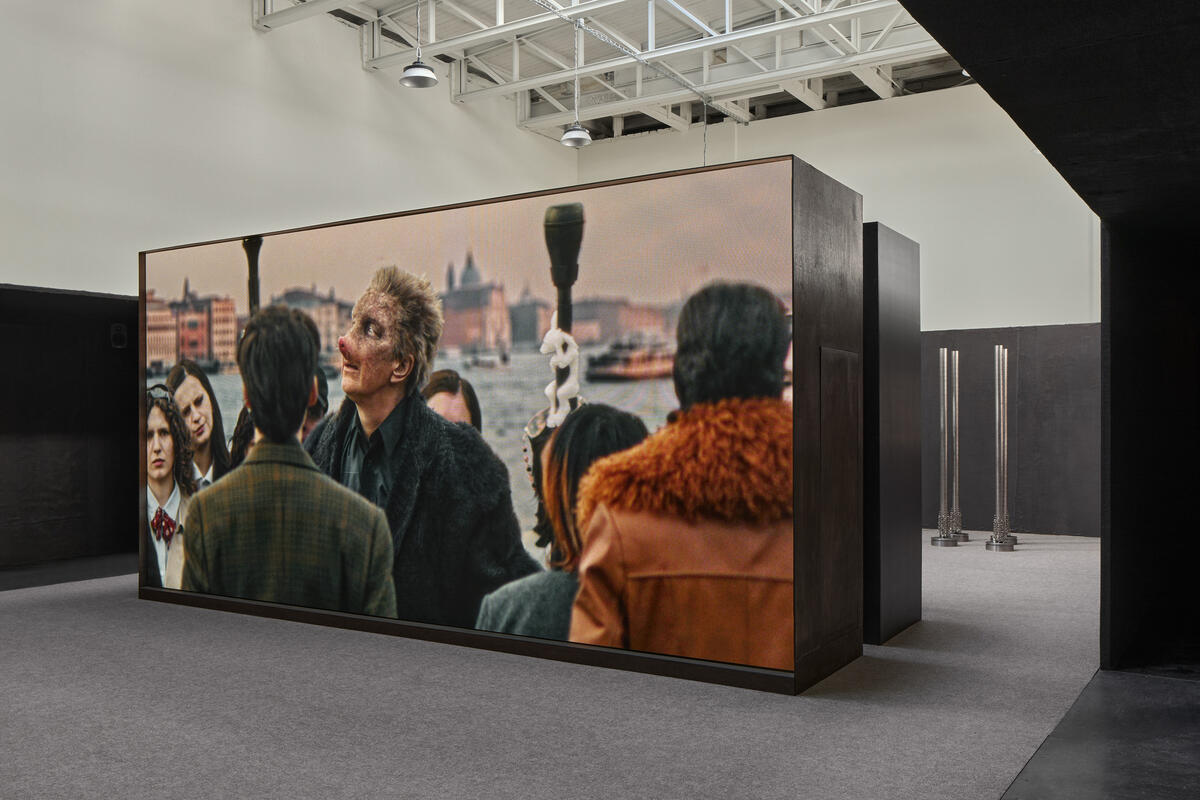
Fast forward three or so decades to a present of very different societal conditions, shaped by violent political, economic, and ecological crises across the globe, often undergirded by the spectacle of authoritarian menace. Into this world enters Mr. M. Mr. M. is a performer who has played, or better yet embodied, the character of the mole throughout their entire life. Their unquestioned devotion to the role has gradually emptied it of meaning. They appear to be professional but lack inner certainty—an actor who has learned to reproduce their role but has long forgotten why. Their devotion to acting has become a substitute for life; it has turned into a ritual of repetition whose meaning has been progressively lost. Once a figure of play and creative freedom, the character has now become unremarkable: unthreatening, universally acceptable, invisible. An everyman trapped inside themself, with no voice of their own, increasingly isolated, as if dispossessed of any political agency. Looking like an ordinary mole—wearing a prosthetic nose that seems to have grown into their face with the flow of time—rather than the cuddly animated figure from our nostalgic childhood memories, they have come to resemble more and more Franz Kafka’s creature that occupies a dark underground burrow.²
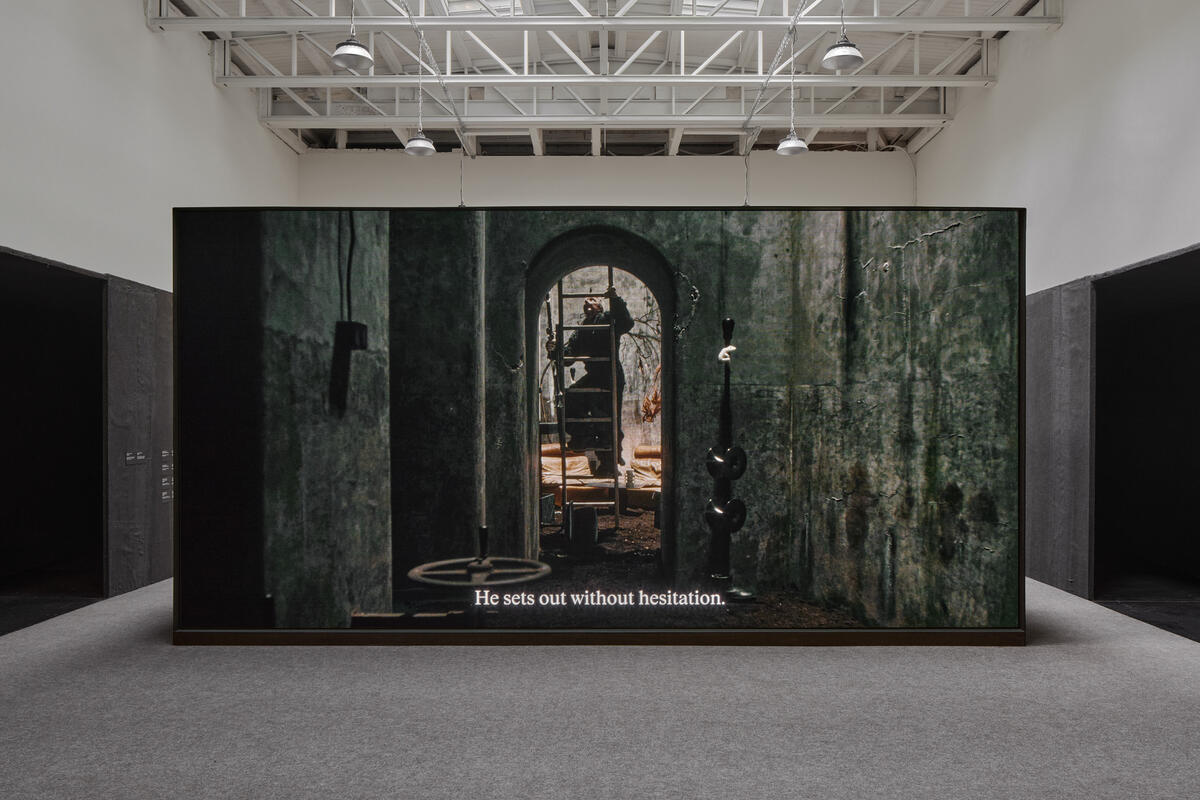
Who knows what made Mr. M. lose their giggles and their joie de vivre; maybe it was the reality of their tiny ears and already bad eyes failing with time, or the knowledge that even though they have aerated the soil and protected the roots of plants from small animals with no backbones—like slugs—they are nothing but a pest to the gardeners with well-manicured shrubs on the surface. And so, seeking seclusion and safety, they dwell underground in what has become an elaborate fortress, where they hide from predators, real or imagined. As Mr. M. digs deeper and deeper, the network of corridors and halls becomes a place of shelter but also of anxiety and isolation. The burrow turns into a labyrinth of introspection, where no clear boundary exists between safety and danger. Much like in Kafka’s story, the only link to the outside world is a strange noise that begins penetrating Mr. M.’s underground world. It is an inexplicable hum of sorts that is constantly present, constantly haunting, constantly violating what was supposed to be Mr. M.’s sanctuary. This “acoustic, metaphysical anxiety”³ leaves Mr. M. with no other choice than to listen to it attentively and silently. It begins to feel like something uncanny or potentially catastrophic is about to take place.
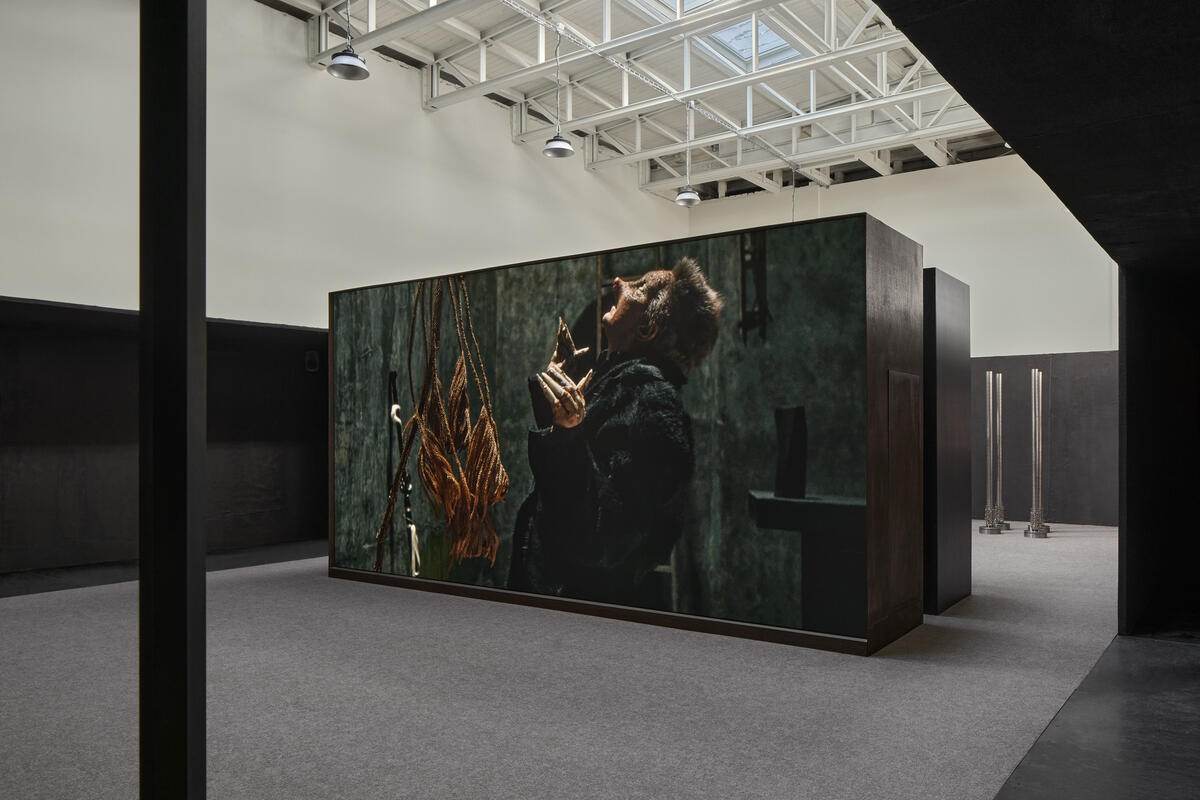
Forced into a state of unceasing vigilance, Mr. M. finds themself on the edge of disintegration and transformation. Their body bears the scars of fatigue—of exhaustion, as so many of our bodies do—but mostly of many years of discipline, of obeying the rules of others. They move slowly but with precision, with gestures that betray both their experience as an actor and the physical pain of aging. In every movement there is a tension between control and the loss thereof, between a desire to perform strength and utter vulnerability. Mr. M., in other words, is in a state of collapse. In their inner silence they try to sense the echoes of the roles they have inhabited throughout their life, seeking meaning. But they can hear nothing except the debilitating hum. Out of despair, Mr. M. turns their silence into resistance: not a mere absence of sound but a radical gesture of refusal to acquiesce.
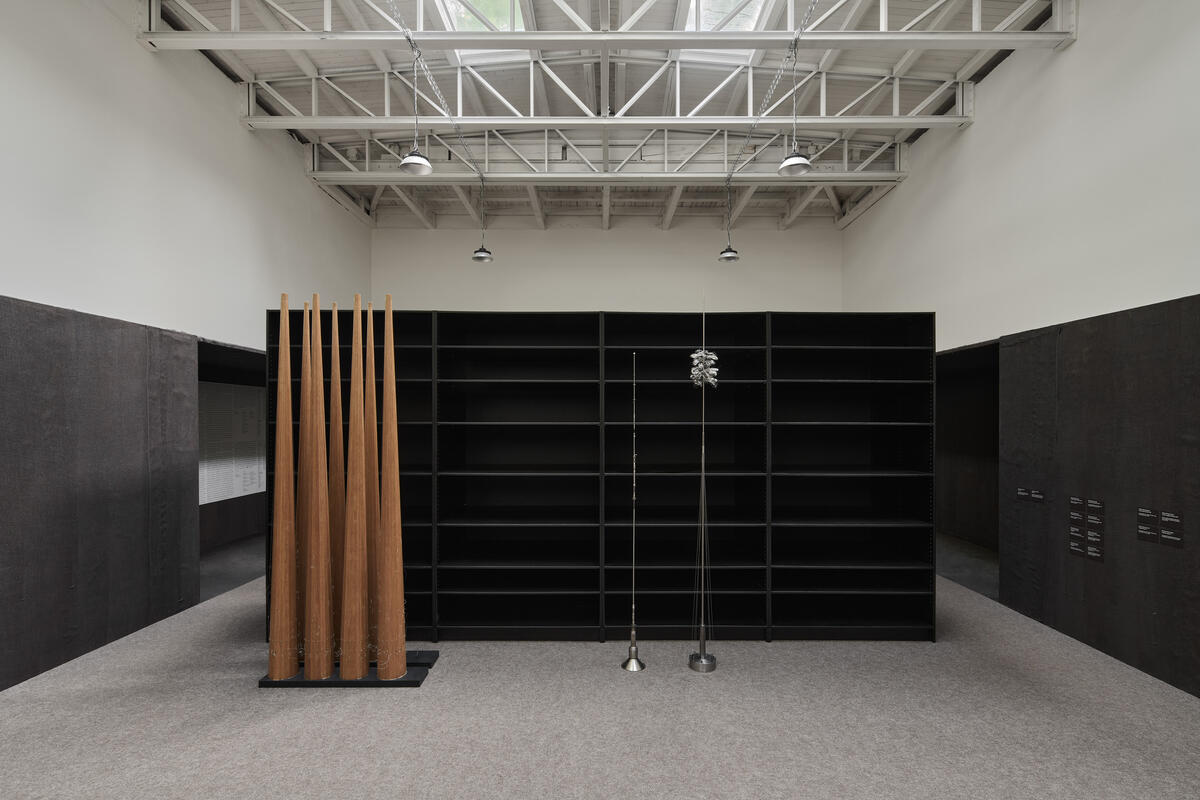
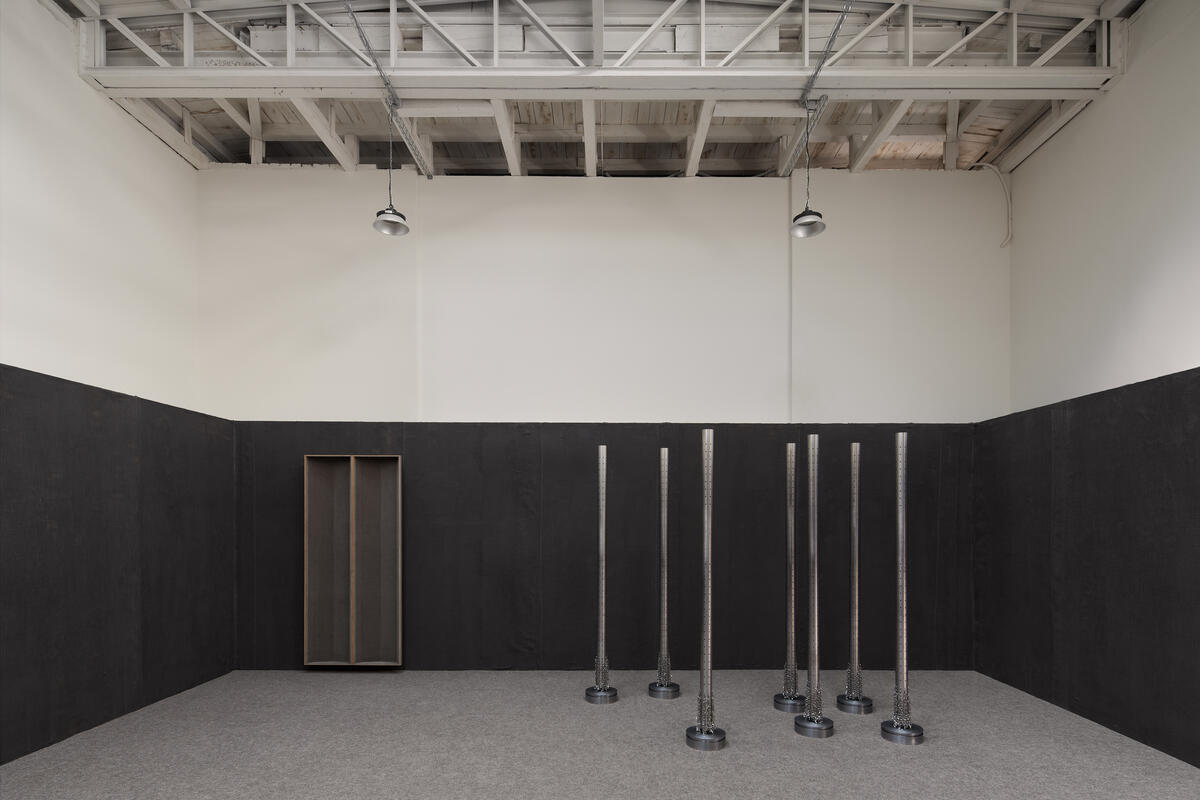
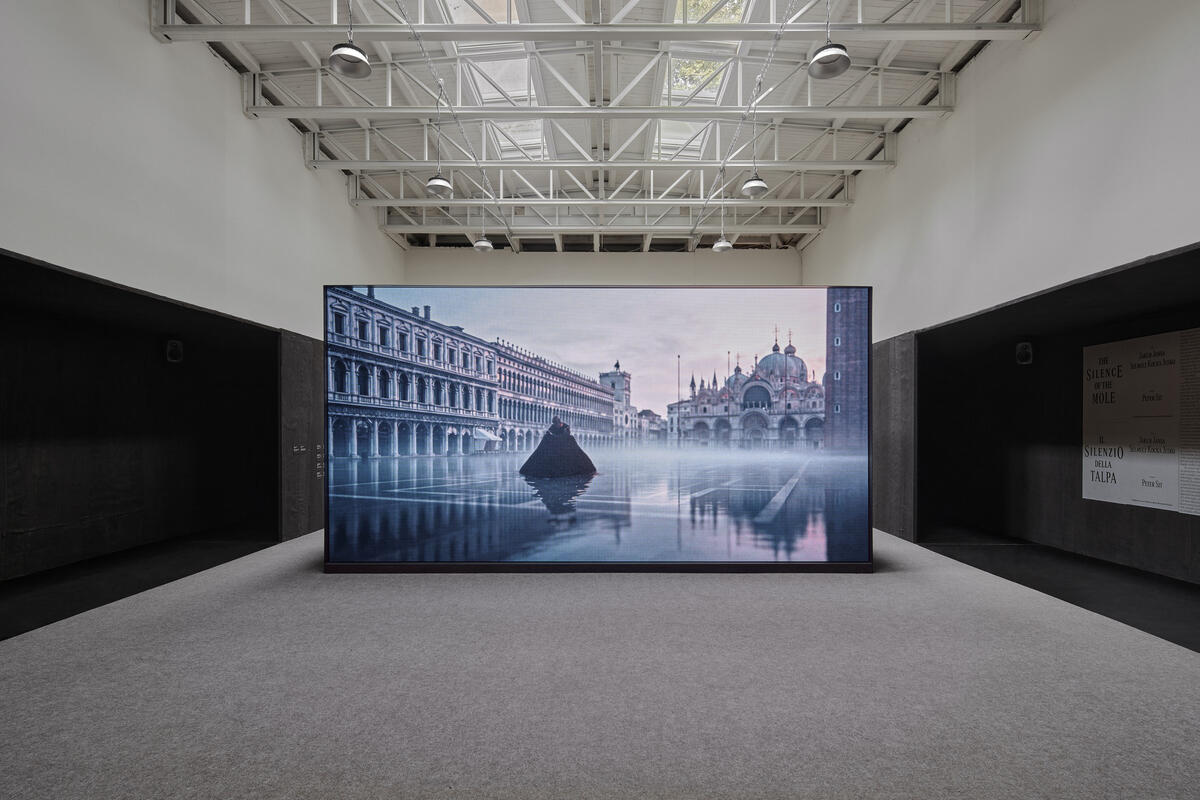
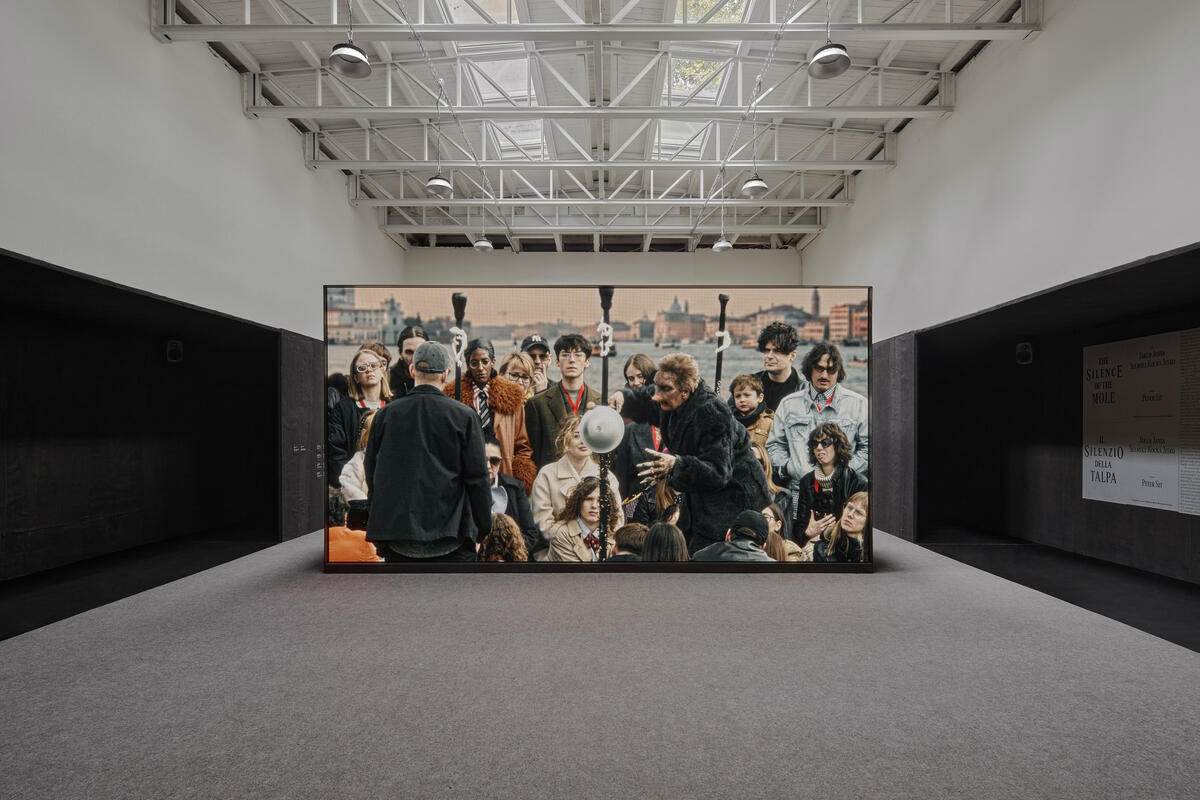
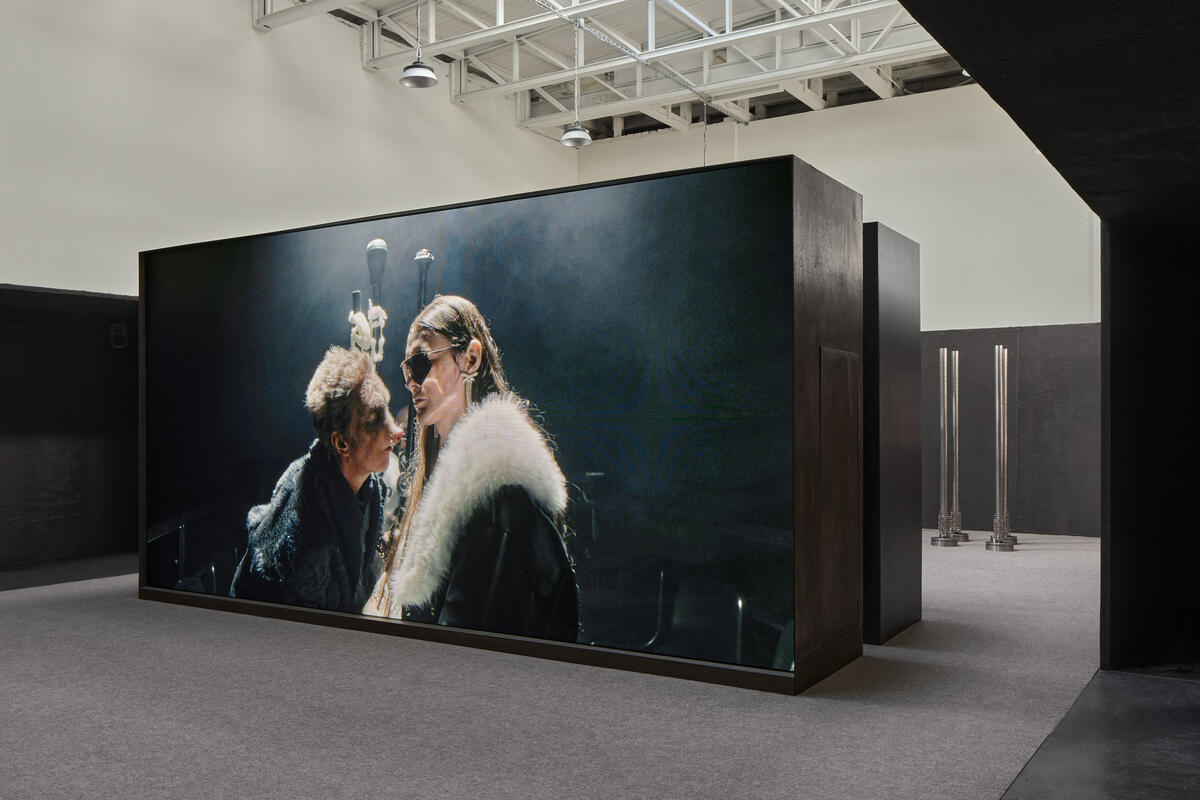
Enter the pavilion and you find yourself in Mr. M.’s burrow: a layered, subterranean space composed of corridors, chambers, and listening points. Traverse the darkened, passageways reminiscent of underground tunnels and you arrive in a central chamber that functions as the mole’s resting space.
This is a place of withdrawal but also concentration, populated by mute objects resembling musical instruments. The instruments were once capable of making music but have now fallen silent—like Mr. M., just multiplied into many. There is also The Ear of the Householder, a sculpture of the inner ear which, like in Kafka, senses a faint, indeterminate sound, bearing witness to it as an instrument of power,⁴ an invisible weapon that transgresses the boundary of the body without consent. It is a perfect instrument of biopolitical control, injecting that which is imperfectly called the “system” into us. As it colonizes the senses, maybe silence can become its adversary. For a rich political genealogy teaches that, in the “deep soil of history,”⁵ a silent energy can accumulate, building an alternative polis where a just world, once only imagined, can be enacted against all odds. The project is an attempt to imagine such a possibility: to explore multiple scenarios that move beyond resistance toward an active practice of imagining and enacting the otherwise, probing what liberation might look like in the present. Let’s test whether art—through sound, space, and encounter—can become that site of rehearsal...If there is a sense of hope in the mole’s silence, it is not naïve optimism—that is not what the pavilion wants to offer. To return to Kafka once more: his story about the burrow ends mid-sentence, as if violently severed from what is to come. Yet in that uncertainty of how his endeavor might end, there is also a possibility. At the very least, all options might still be open.
Film Credits
The Silence of the Mole
Jakub Jansa
Short film, 2026
2K, 13 min 40 sec
6-channel sound
Mole language, English, English subtitles
Author
Jakub Jansa
Production Company
Closer
Director of Photography
Tomáš Kotas
Executive Producer
Matouš Marcinko
Producer
Kristýna Kapounová
Editor
Sebastián Kučkovský
Music, Sound Design, Spatialisation
Oliver Torr
Costumes Designer
Karolína Juříková
Performance Mole
Daniela Voráčková
Performance Curator
Anna Gherezgiher-Nikl
Voice Artist
Natalie Mariko
Set Design
Kamila Duong
James Wood
(Platna Studio)
Musical Instruments
Selmeci Kocka Jusko
Jakub Jansa
Platna Studio
On-set photography
Shot by Us
Barbora Bydžovská
Jakub Jansa
Casting
Arwa Salmanova
(Simon Says)
SFX
Jakub Gründler
Make-up and Hair Designer
Olga Khomyn Horáčková
Grading
Jacob McKee (Color With Primary)
Producer
Alex Zhao
Lead VFX
Lucas Saidl
VFX artists
Sebastian Baalbaki
Adam Soukup
Veronika Bočková
Matěj Procházka
Pavel Král
Online & Data Master
Conform
Igor Kadeew
Production Manager
Sára Němečková
Post-production Coordinator
Lucie Kostková
1st AD
Matěj Bláhovec
Locations
Ondřej Novák
Martin Šimral
(onspot.pictures)
Production Assistant
Antonín Šmaus
Julie Sroková
Runner
Jonáš Tuháček
Camera Operators
Shubh Chao
Adam Kovář
1st AC
Matěj Kovárník
2nd ACs
Jan Drdák
Marcela Mencelová
VTR/DIT
Michal Filus
Set Sound
Jonáš Balcar
Camera Trainee
Lea Decroix
Gaffer
Tomáš Volter
Best boy
Martin Pospíšil
Electricians
Bianca Banikova
Pavel Cicu
Jan Lukůvka
Jiří Schejbal
Jakub Vodrážka
Jakub Jursa
Key Grip
Michal Ráliš
Filip Pečený
Grip
Tadeáš Krois
Props
Jan Šrankota
Stby Props
Henry Truong
Costumes Assistant
Natálie Nepovímová
Extras casting
Jamilya Andreyeva